
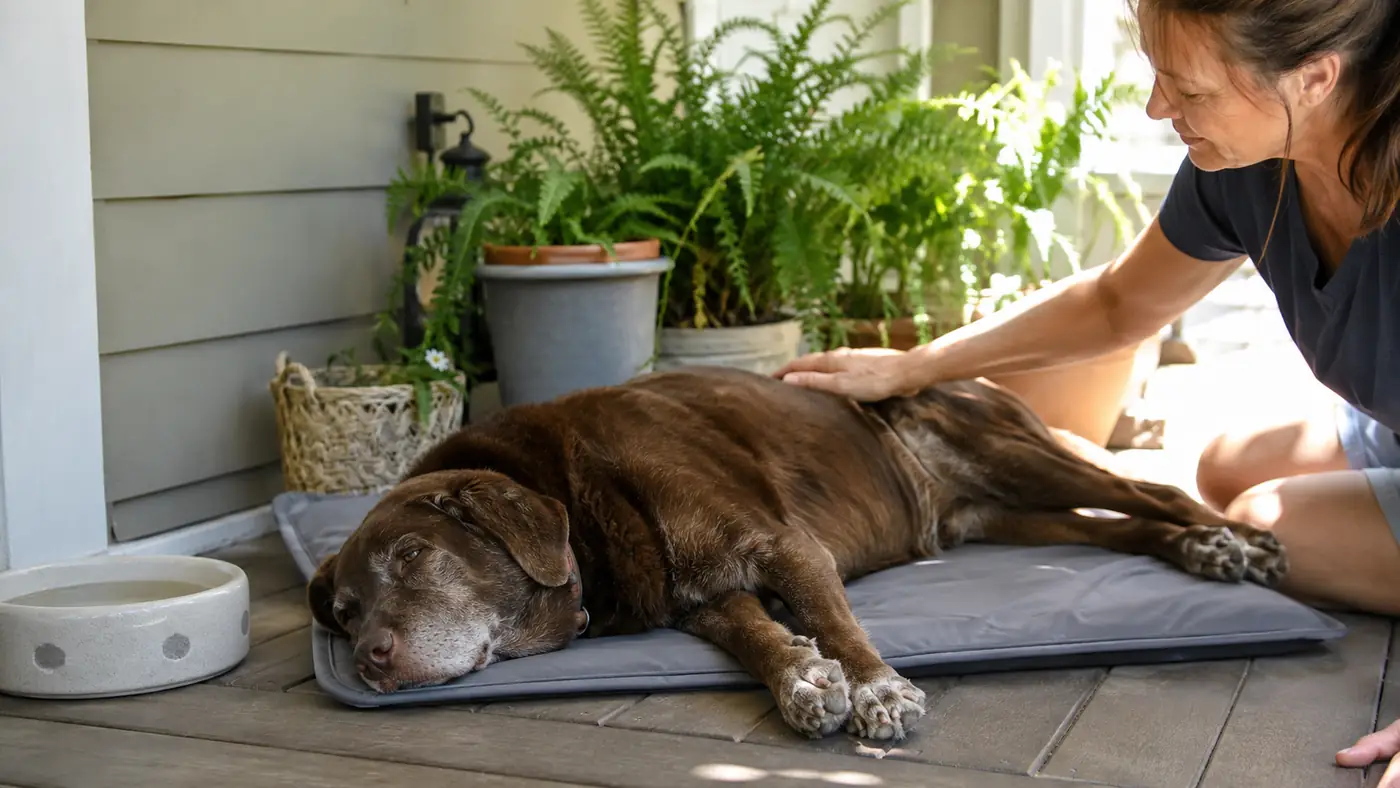
By late June, I already know which member of my house is going to have the hardest time with the heat. Duke, my twelve-year-old yellow Lab mix, spends every summer afternoon sprawled on the coolest patch of floor he can find, panting through naptime instead of actually resting. Running the air conditioner colder and longer felt like the obvious fix, until I saw what it was doing to my electric bill in July. What actually changed the way my house handles a heat wave was pairing an Arf Pets self-cooling gel mat with a handful of habits that cost nothing to run, and that combination is what this guide walks through, step by step, so your dog can stay cool without you needing to turn the AC into a full-time job.
This isn't theory. I've run this exact routine for three summers now across three dogs with three completely different heat tolerances, plus whatever foster dogs happen to be moving through the house at the time. Some of it I got right immediately. Some of it I only figured out after watching Duke pant through an afternoon he didn't need to. What follows is the version that actually works, not the version I started with.
The mat has to be down before the panting starts, not after.
An Arf Pets self-cooling gel mat is the piece of this routine that does the most work for the least effort. No water, no freezer, no cord, just a cool spot that's ready the second a hot dog needs it.
Amazon Check Today's Price on Amazon →Step 1: Learn Your Dog's Early Heat Signs Before They Become a Problem
Most people wait to act on summer heat until a dog is already in distress, heavy panting, drooling, refusing to move. By that point you're managing a problem instead of preventing one. I've learned to watch for the smaller signals that show up first: Duke slowing his pace on a walk that used to be easy for him, choosing to lie flat instead of curled up, or picking the tile over his own dog bed. Those are the early tells that heat is starting to win, well before anything looks like an emergency.
Every dog in my house runs differently. Ranger, my shepherd mix, gets uncomfortable early and lets me know about it, pacing and whining at the back door on days that don't even feel that hot to me. Gus, my youngest, seems almost immune to it until the temperature climbs into the mid-90s, and then he crashes hard and fast. Knowing that difference matters, because it tells me who needs the cooling mat first on any given afternoon and who can wait.
I check the actual forecast every morning during the summer, not just the high temperature but the humidity, since a humid 85-degree day can be harder on a dog than a dry 92-degree one. On the days where both numbers are climbing, I set everything up before noon instead of waiting to react once someone's already uncomfortable. That single habit, planning ahead of the heat instead of responding to it, is the biggest shift that made the rest of this routine work.
Step 2: Set Up the Cooling Mat as a Home Base
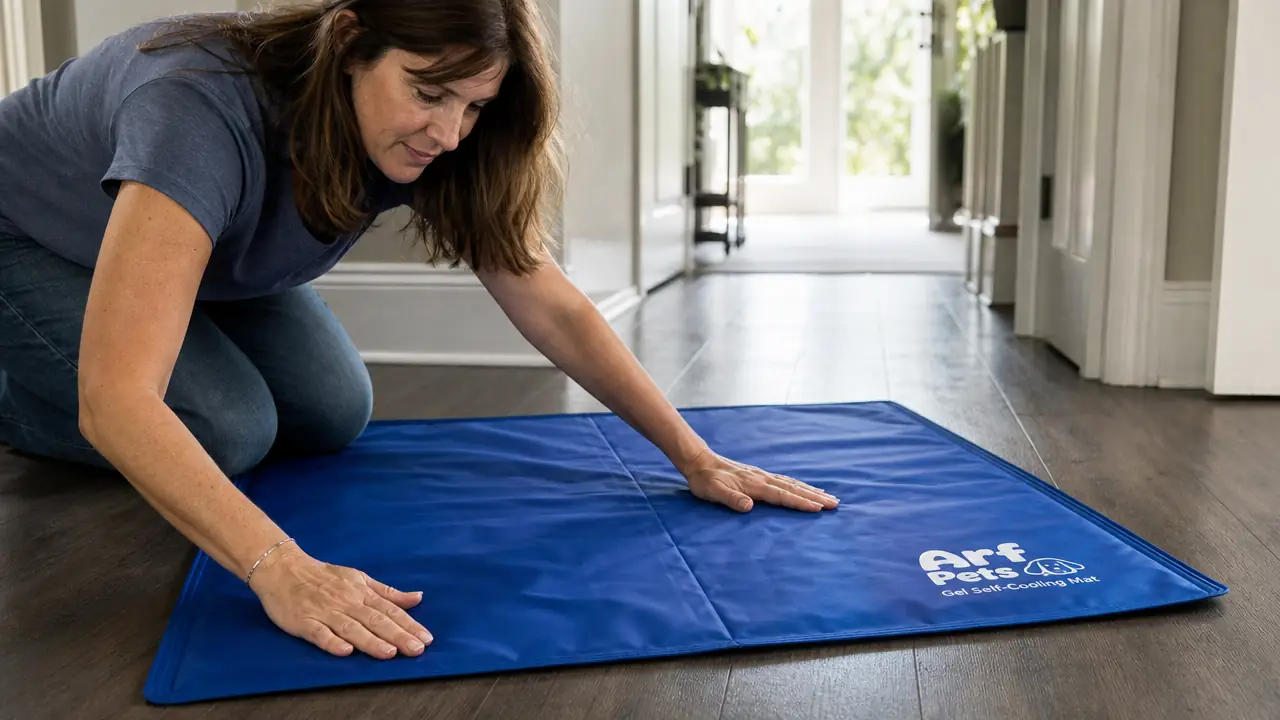
The Arf Pets mat is a gel-filled pad that activates under body pressure, no water reservoir, no plugging it in, no ice packs to remember. You unroll it, press on the surface a few times to get the gel layer working, and it's ready to go. I keep ours in a spot that gets shade for most of the day, since the mat pulls heat away from the dog's body, not the surrounding air, so putting it in direct sun defeats a chunk of the point.
I've moved ours around the house across three summers before landing on what works. Right now it lives in the hallway between the kitchen and back door during the day, since that's the spot every dog in my house passes through constantly, and it goes into Duke's crate in the evening once he's ready to settle in for the night. Wherever the dog naturally wants to be already, that's where the mat should go. Fighting your dog's own instinct about where to lie down just means the mat sits empty while they overheat somewhere else.
One thing I'd tell anyone setting this up for the first time: give it a real trial run before the worst heat hits. I activated ours in early May, well before the first 90-degree day, so Duke had already built the habit of choosing that spot by the time he actually needed the cooling benefit. A dog who's never seen the mat before is less likely to use it on the one afternoon it matters most.
Step 3: Time Outdoor Time Around the Actual Heat, Not the Clock
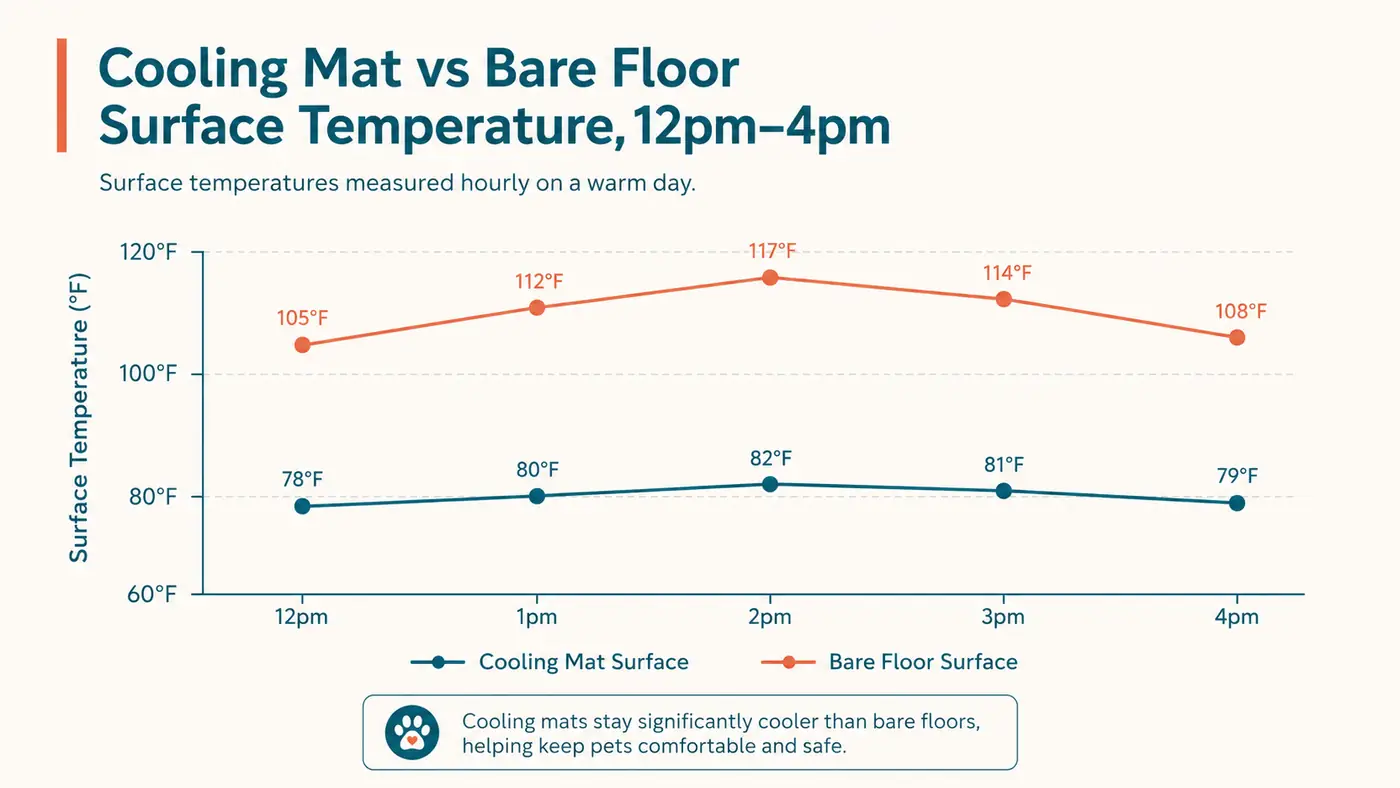
I used to walk the dogs on whatever schedule fit my day, which in summer meant plenty of walks happening right through the hottest stretch of the afternoon. Now I plan around the heat itself instead of the clock. Walks happen before eight in the morning or after seven at night during a real Ohio heat wave, and the middle of the day is reserved for the cooling mat, shade, and staying indoors as much as possible.
Pavement is the piece people miss most often. I press the back of my hand against the sidewalk before any midday walk, and if I can't hold it there comfortably for five seconds, it's too hot for Duke's paws no matter what the air temperature says. That simple check has kept me from walking on surfaces that would have burned him, especially on the asphalt stretch near my street that holds heat long after the grass has cooled off.
For any outdoor time that does happen mid-afternoon, backyard breaks, a quick trip to the car, I keep it short and I keep the cooling mat waiting right when they come back in. That combination, brief exposure followed by an immediate cool-down spot, does more than either piece alone. A dog who gets five minutes outside and then flops straight onto the mat recovers a lot faster than one left to pant it out on a regular bed.
Step 4: Build a Rotation of Low-Effort Backup Cooling
The mat handles the bulk of the work, but I keep a few other low-effort tools in rotation for the worst stretches of summer. A box fan pointed at the mat adds real airflow on top of the gel cooling for almost no cost to run. Wetting a dog's paws and the fur along their belly with cool water before they settle down helps too, since those are areas where heat transfers out faster than through a thick coat.
Frozen treats are another cheap, easy addition. I freeze plain bone broth in silicone molds and hand them out mid-afternoon, which gives the dogs something to occupy themselves with while also cooling them from the inside a little. It's not a replacement for the mat, but it stretches the effect of the whole routine and gives them something to do besides just lying there uncomfortable and bored.
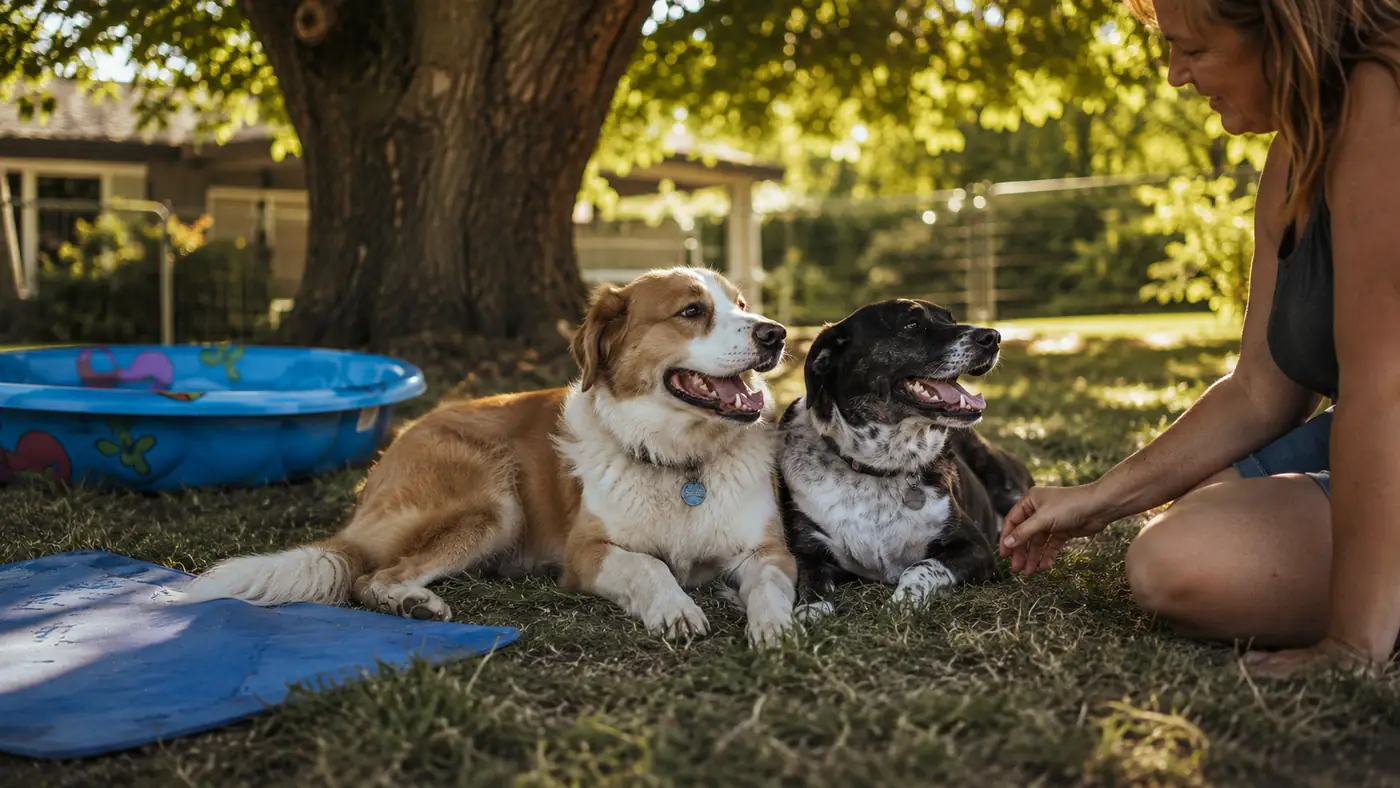
A shallow kiddie pool in the backyard rounds out the rotation for the dogs who actually enjoy water. Ranger will wade into it up to his belly and just stand there on the worst afternoons, which cools him fast without me doing anything at all. Gus mostly ignores the pool but heads straight for the mat instead. I don't force either one toward a tool they don't like. The goal is giving every dog in the house at least one option that actually works for them.
Step 5: Adjust for the Dogs Who Run Hottest in Your House
Not every dog needs the same amount of intervention, and treating them all identically wastes effort. Duke, at twelve, gets priority access to the mat and the shortest outdoor windows of anyone in the house, since older dogs regulate temperature less efficiently and heat stress can sneak up on them faster than people expect. If Ranger and Duke both want the mat at the same time, Duke gets it first, no debate.
Foster dogs add another layer to this. We've had Pearl and Tank through the house this summer, and both came in already a little heat-stressed from time outdoors before we got them. Pearl, a stockier mixed breed, took to the cooling mat almost instantly, while Tank needed a few days of encouragement before he trusted a new object in an already unfamiliar house. I never assume a foster will read the heat the same way my own dogs do, so I watch each one closely for the first week and adjust the rotation based on what I actually see, not what worked for the last foster.
Biscuit, our senior cat, solves her own heat problem by finding the coolest tile in the house and refusing to move from it, which is honestly a pretty good strategy on her part. She has no interest in the dogs' mat and I've never tried to include her in this routine. The point isn't to force every animal in the house through an identical process, it's to give each one a real option that fits how they actually handle summer.
What Else Helps
A few habits outside the mat itself have made a real difference over three summers of doing this. Fresh, cold water matters more than people give it credit for, and I refill every bowl in the house at least twice a day during a heat wave, since water left sitting out warms up fast and dogs drink less of it once it does. I also keep a folding shade canopy set up over the patio from June through August, since natural shade shifts throughout the day and a fixed canopy gives everyone a reliable cool spot no matter what time they're outside.
A summer trim helps some of my dogs more than others. Ranger's double coat actually insulates him from heat when it's left alone, so I don't shave him down no matter how tempting it looks on a 95-degree day. Gus, with a shorter single coat, doesn't get the same benefit from length either way. Knowing which of your dogs actually needs a trim versus which one is better off with their coat intact is worth a quick conversation with your vet or groomer before you reach for the clippers out of good intentions.
I also keep an eye on the calendar itself, not just the thermometer. The hottest stretch of an Ohio summer usually runs from mid-July through late August, so that's when I stop treating the cooling routine as optional and start treating it as a daily requirement, same as feeding or walks. Outside that window, on the milder 80-degree days that show up in early June or September, I'll skip the mat some afternoons and just let the dogs choose their own cool spot, since not every warm day needs the full routine.
The mat handles most of the work, but the real shift was planning around the heat instead of just reacting to it once someone was already uncomfortable.
Get the mat down before the first 90-degree day catches you off guard.
This is the exact Arf Pets self-cooling gel mat I run as the home base of our whole summer routine, no water, no freezer, no cord, just a cool spot that's ready the moment a hot dog needs it.
Amazon Check Today's Price on Amazon →