
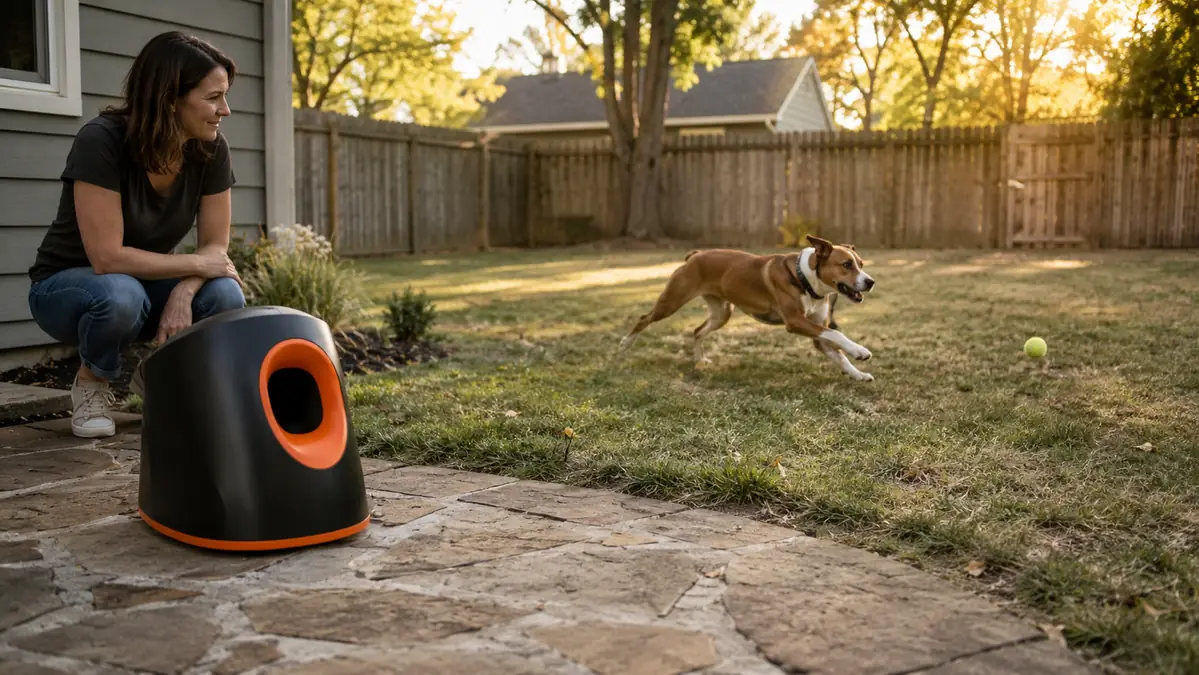
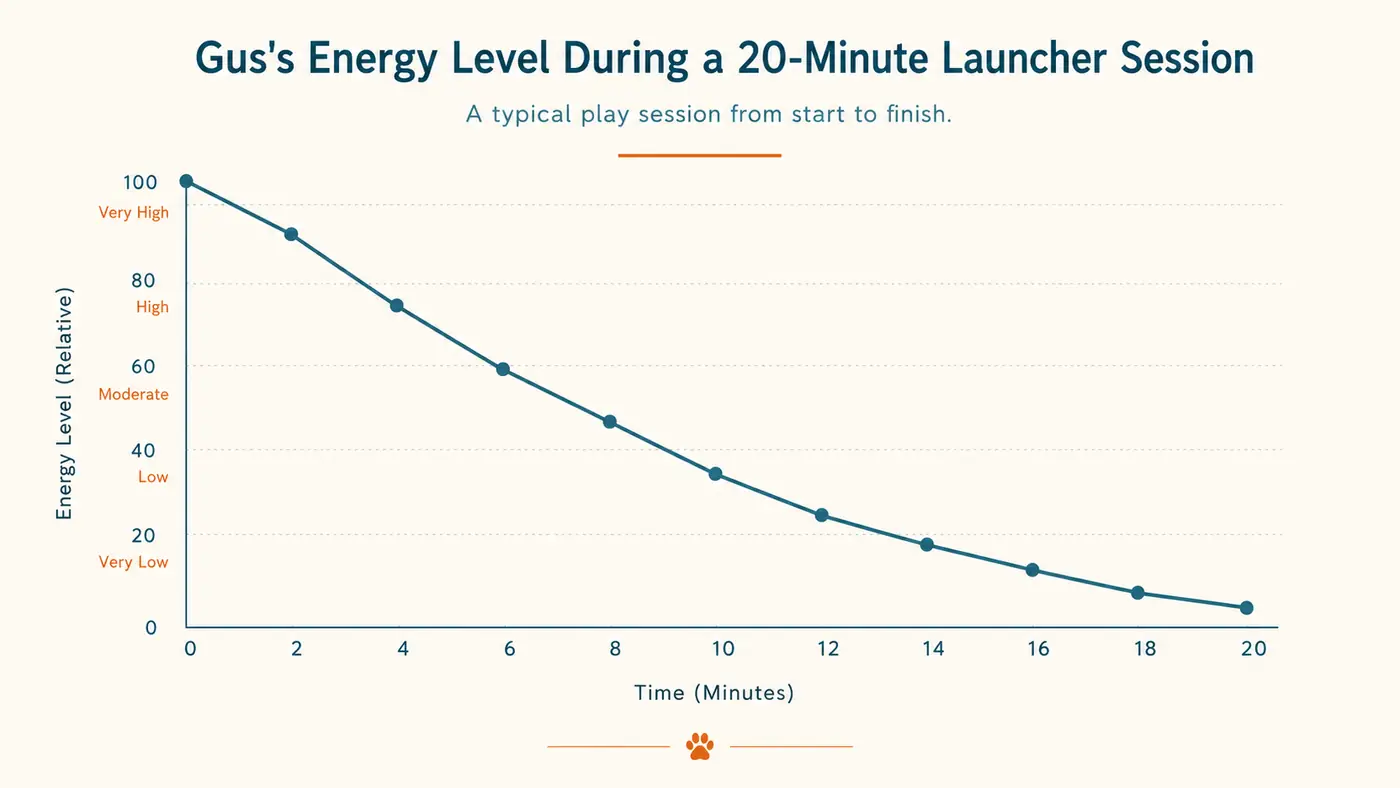
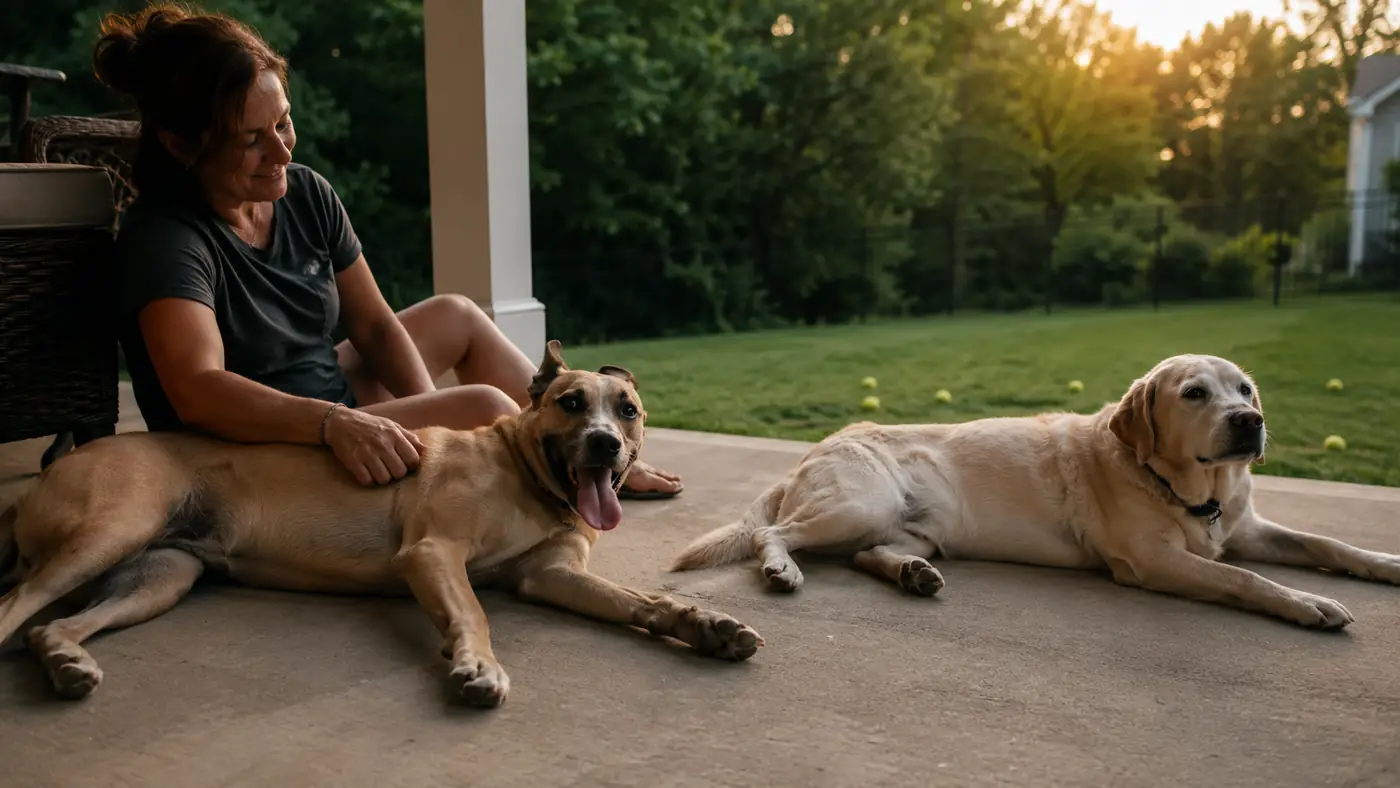
By five o'clock most evenings, Gus is doing figure-eights around the coffee table, nose pressed to the back door, whining low in his throat. He's my highest-drive foster-turned-permanent, a shepherd mix with the kind of engine that used to leave me winded before he even broke a sweat. My arm gave out on fetch duty two winters ago, real tennis elbow, real ice packs, and that's when I brought home the MEKAPLE automatic ball launcher and started throwing balls for him without throwing a single ball myself. Duke, our twelve-year-old senior, retired from fetch years ago and mostly supervises from the porch these days, and Ranger, our other dog, has never had Gus's drive to begin with. This list is really about Gus, and about what actually wears out a dog whose energy doesn't taper off just because the sun is going down.
Here's the thing nobody warns rescue people about: some dogs, the Gus-type dogs, don't get tired from a walk around the block. They get tired from a hunt. The launcher turns my back deck into a repeat-hunt machine, and after twenty minutes flat, Gus is drinking water on the kitchen floor instead of pacing my living room at nine that night. Ten reasons a ball launcher earns its spot on my patio, no filler, no gimmicks, just what actually tired him out.
Before your dog wears a groove in your living room floor
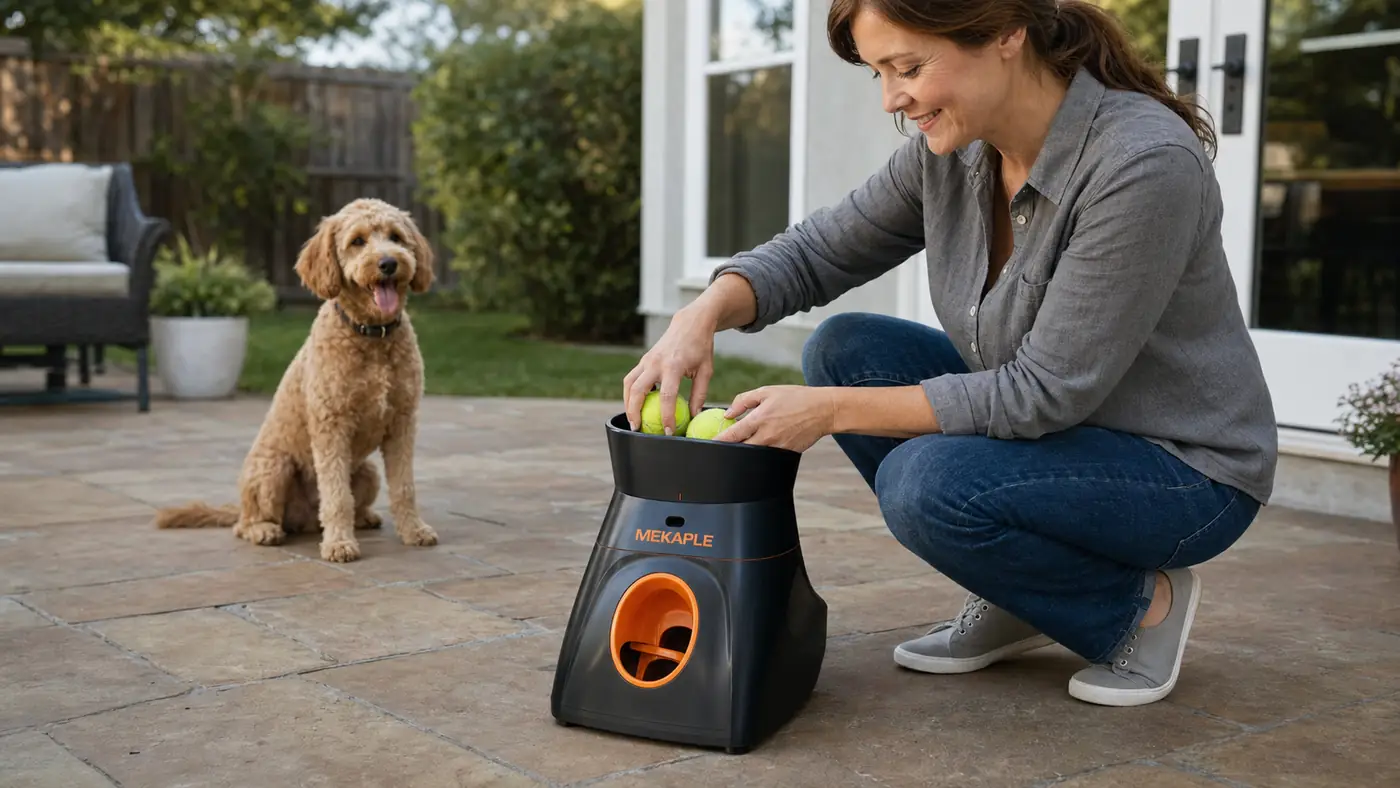
The MEKAPLE automatic ball launcher comes with fifteen mini tennis balls and three distance settings, plenty to run a dog like Gus into the ground in twenty minutes flat.
Amazon Check Today's Price on Amazon →It Throws Farther and More Consistently Than My Arm Ever Did
My best underhand toss on a good day maxed out around thirty feet, and it got shorter and lazier every throw after the tenth one. The MEKAPLE launcher fires the same distance on the same setting every single time, no fatigue, no shortcuts. For a dog like Gus, that consistency matters more than raw distance. He's sprinting full speed on throw forty the same way he sprinted on throw one, because the ball never gets a lazy toss.
High-Drive Dogs Need Reps, Not Just Distance
Gus doesn't get tired from one long throw, he gets tired from forty short ones back to back. That's the part most people underestimate about a genuinely high-energy dog. The ball launcher's automatic timer keeps the balls coming every few seconds, which means the reps stack up faster than any human arm could manage. Twenty minutes of near-constant launches wears him out in a way a slow-paced game of catch never touched.
Hands-Free Play Means the Session Doesn't End When My Arm Does
Before the launcher, fetch sessions ended the moment my shoulder said stop, usually well before Gus was actually tired. Now I load the hopper, hit the button, and the launcher keeps going while I sit on the porch step or start dinner. The session ends when Gus decides to lie down, not when I run out of stamina, and that difference alone is why he's finally winded by the time I sit down for the evening.
The Chase-and-Anticipate Cycle Wears Out the Brain, Not Just the Legs
Gus doesn't just chase the ball, he watches the launcher, reads the timing, and braces before it fires. That anticipation is real mental work for a dog bred to track and predict movement. A tired brain settles faster than tired legs alone, and I've noticed Gus stops pacing the kitchen an hour after a launcher session in a way a plain walk around the block never accomplished.
Three Distance Settings Let Me Match the Yard to the Dog
Our backyard runs about forty feet from patio to fence line, so I keep the launcher on the middle setting most days. On rainy afternoons I've dropped it to the shortest setting and run a session in the mudroom instead, and on the rare wide-open day at my sister's place I've bumped it to the longest throw just to see Gus really open up. Being able to adjust distance instead of buying a different toy for every yard has made this launcher work in more spaces than I expected.
It Keeps a High-Drive Dog From Competing With the Rest of the House for Attention
Before the launcher, Gus's fetch obsession meant everyone else got less of me, Duke lost his quiet porch time, Ranger got shorter walks, Biscuit hid from the chaos entirely. Now Gus gets his hard, focused run on the launcher while I actually have a hand free for Duke or a few quiet minutes with Ranger. One dog's energy stopped eating into everyone else's routine the moment the launcher took over his hardest exercise.
The Predictable Launch Rhythm Calms Anxious Fosters, Too
Pearl, a foster who came to us reactive to sudden movement, was nervous around a human throwing arm at first, the fast unpredictable motion clearly spooked her. The launcher's steady, timed rhythm turned out to be easier on her than a person winding up to throw. Within a week she was waiting calmly for the next launch instead of flinching at every motion in the yard, which told me the machine's predictability is doing real work beyond just tiring dogs out.
Fifteen Mini Tennis Balls Mean Fewer Walk-Back Breaks
A hopper loaded with a full batch of balls keeps Gus sprinting almost continuously instead of stopping to wait while I walk out and retrieve a single ball for the next throw. Those walk-back breaks used to cool him down between throws and stretch a tiring session into a mild one. With a full hopper, the launcher keeps firing while he's still mid-retrieve on the last ball, which is exactly the kind of nonstop pace that actually exhausts a dog like him.
It's Built for Real Backyard Use, Not Just a Living Room Demo
This isn't a toy I'm precious about. It's been rained on more than once, kicked over by an excited dog, and dragged across patio stones to a new spot to save the grass underneath. It still fires straight and loads balls one at a time without jamming. A launcher that can't handle actual dirt, grass, and weather isn't going to survive daily use with a dog who plays outside, rain or shine, the way Gus does.
It Saves My Shoulder for the Dogs Who Need Hands-On Time
Duke is twelve now and needs gentle joint massage most evenings, not a game of fetch. Biscuit, our senior cat, wants slow lap time, not chaos. Every minute my arm isn't throwing a ball for Gus is a minute I can actually give to the two of them instead. The launcher didn't just solve Gus's energy problem, it gave me back the physical bandwidth to take care of the rest of the household properly.
What I'd Skip
Not every automatic ball launcher on the market earns a spot on your patio. I'd skip anything without an adjustable distance setting, a fixed single-distance launcher is nearly useless once your dog outgrows the shortest range or you need to run a session indoors on a rainy day. I'd skip a hopper that holds fewer than ten balls, since constant reloading defeats the whole point of hands-free play. And I would never run any launcher unsupervised with more than one dog in the yard, a machine firing on a timer doesn't know or care which dog is closest to the landing spot, and that's not a risk worth taking with Ranger and Gus both underfoot.
The launcher doesn't replace me. It just means Gus is tired by the time I sit down, instead of the other way around.
Give your throwing arm the night off
This is still the one piece of gear that gets Gus out of my kitchen and into the yard every single afternoon, tired out before dinner instead of pacing after it.
Amazon See Today's Price on Amazon →