
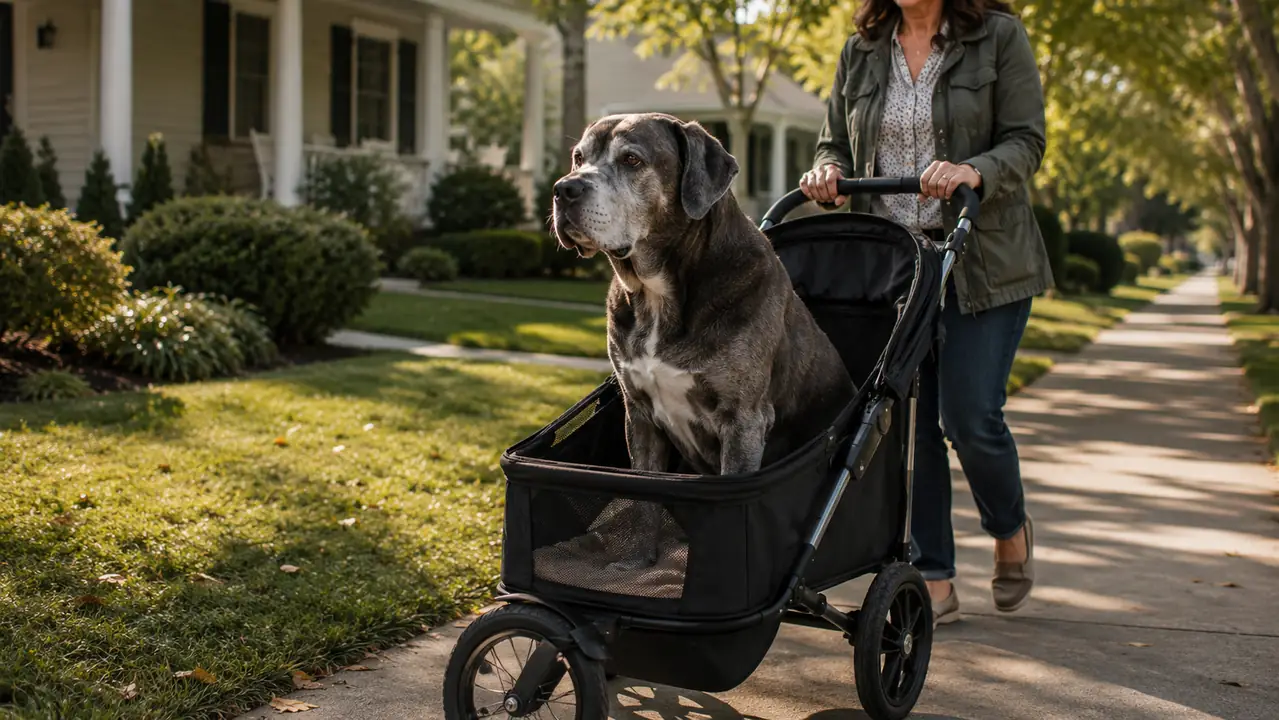
Duke is my twelve-year-old yellow Lab mix, seventy-six pounds of gray muzzle and a bad right hip he's had since a hard landing off our porch steps back in 2023. For years our routine was simple: leash on, walk to the end of the block and back, twice a day, rain or shine. Then last winter he started stopping halfway down the driveway, looking back at me like he wanted to keep going but his back end just wouldn't cooperate. That's when I bought the BestPet 3-Wheel Pet Stroller, and six months later I can tell you exactly what it fixed, what it didn't, and whether it's worth the money for a dog like Duke.
I'm not a gadget person. Fifteen years of fostering rescues in a house with two other dogs, Ranger and Gus, plus my senior cat Biscuit, has made me pretty allergic to anything that promises to solve a problem it doesn't actually solve. I almost didn't buy this stroller because I pictured it collecting dust in the garage after two weeks, the way a lot of pet gadgets do around here. It didn't. It became part of our daily walk within the first week, and it's still in the back of my car right now.
The Quick Verdict
A genuinely useful, budget-priced stroller that kept a stiff-hipped senior dog getting outside daily. Not a jogging stroller, not indestructible, but solid for what most of us actually need.
Amazon Check Today's Price →Duke still can't walk two miles. He can still smell every mile of them.
If your dog's legs are quitting before their curiosity does, this is the stroller that bridges the gap between a short walk and staying home. Check today's price and current availability before it's back-ordered again.
Amazon Check Today's Price on Amazon →How I've Used It
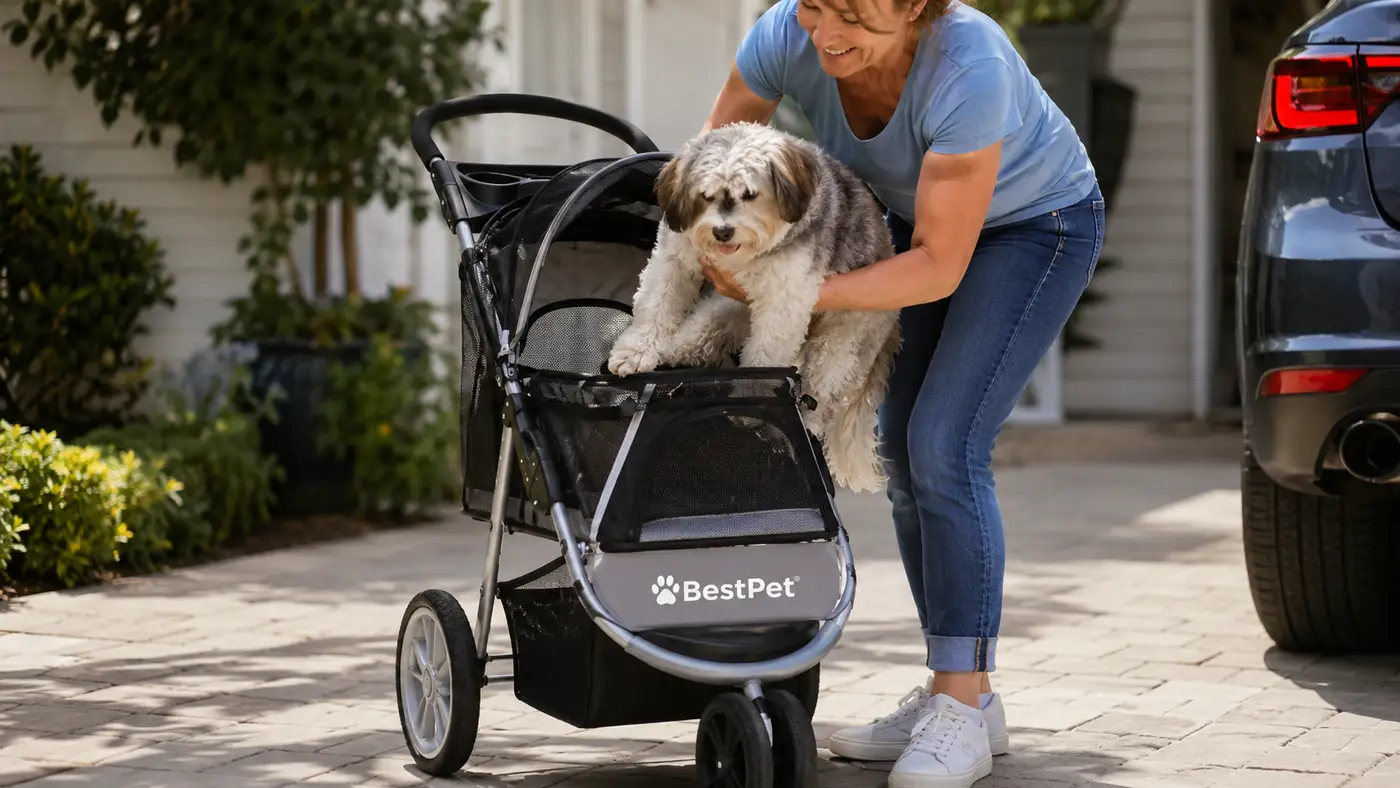
The routine we settled into by week two looks like this. Duke walks the first three or four houses on his own leash, because he still wants to and I want him to keep whatever mobility he has left. Once he starts lagging or his back leg starts that little hitch he gets when the hip is bothering him, I stop, unzip the mesh dome, and lift him in. From there we cover another mile, sometimes two, with him riding upright and alert, nose working the whole time. Then we do the reverse on the way home so he walks himself up the driveway instead of being carried out of a stroller in front of the neighbors, which I think matters more to his dignity than mine.
I use it almost every day now, not just on days he's clearly struggling. Partly that's because once you own one, it's less work to bring it than to gamble on whether today is a good hip day. Partly it's because Ranger and Gus still need real exercise, and I can walk all three dogs at once with Duke riding and the other two on a double leash, which was genuinely not possible before.
The one adjustment period was training Duke to actually enjoy riding instead of seeing it as being punished or left out. The first two rides he whined at every dog that passed. By week three he'd figured out the stroller meant he still got to go on the walk, just with a better view, and now he walks straight toward it when I pull it out of the garage.
By my rough count, we've logged somewhere north of four hundred rides since last winter, most of them fifteen to twenty-five minutes long. That's not a number I tracked on purpose, it's just what six months of near-daily use adds up to once I actually sat down and did the math for this review. Duke's weight has stayed steady around seventy-six pounds the whole time, comfortably under the stroller's stated capacity, and I've never felt like the frame was straining under him even on the days I've also tossed a small blanket and his water bowl in beside him.
Build Quality and Ride Comfort, Six Months In
The frame is aluminum, not steel, which is part of why it's light enough for me to lift in and out of my trunk one-handed, but it's also why I never expected it to survive rough terrain the way a jogging stroller would. On sidewalks and paved trails, which is ninety percent of what we do, it's been completely stable. The three-wheel layout, one wheel up front that swivels and two fixed wheels in back, turns tighter than I expected on our narrow sidewalks, which matters when you're also managing two other leashed dogs at the same time.
The mesh compartment has held up better than I thought it would. Duke isn't a chewer at his age, so I can't speak to how it'd hold against a dog trying to claw or bite through it, but under normal riding conditions the mesh still looks close to new after six months of near-daily use. The floor pad inside compresses under his weight the way a decent dog bed would, not flat and not stiff, and he lies down in it on longer rides instead of just sitting upright the whole time.
The suspension is basic, more shock absorption than true suspension, but on the cracked sidewalks in my neighborhood it's smoothed out enough of the jolt that Duke doesn't flinch the way he does riding in the back seat of my car over the same stretch of road. That was actually the thing that surprised me most. I expected a budget stroller to rattle him around. It doesn't.
Six Months of Walks, What Actually Changed for Duke
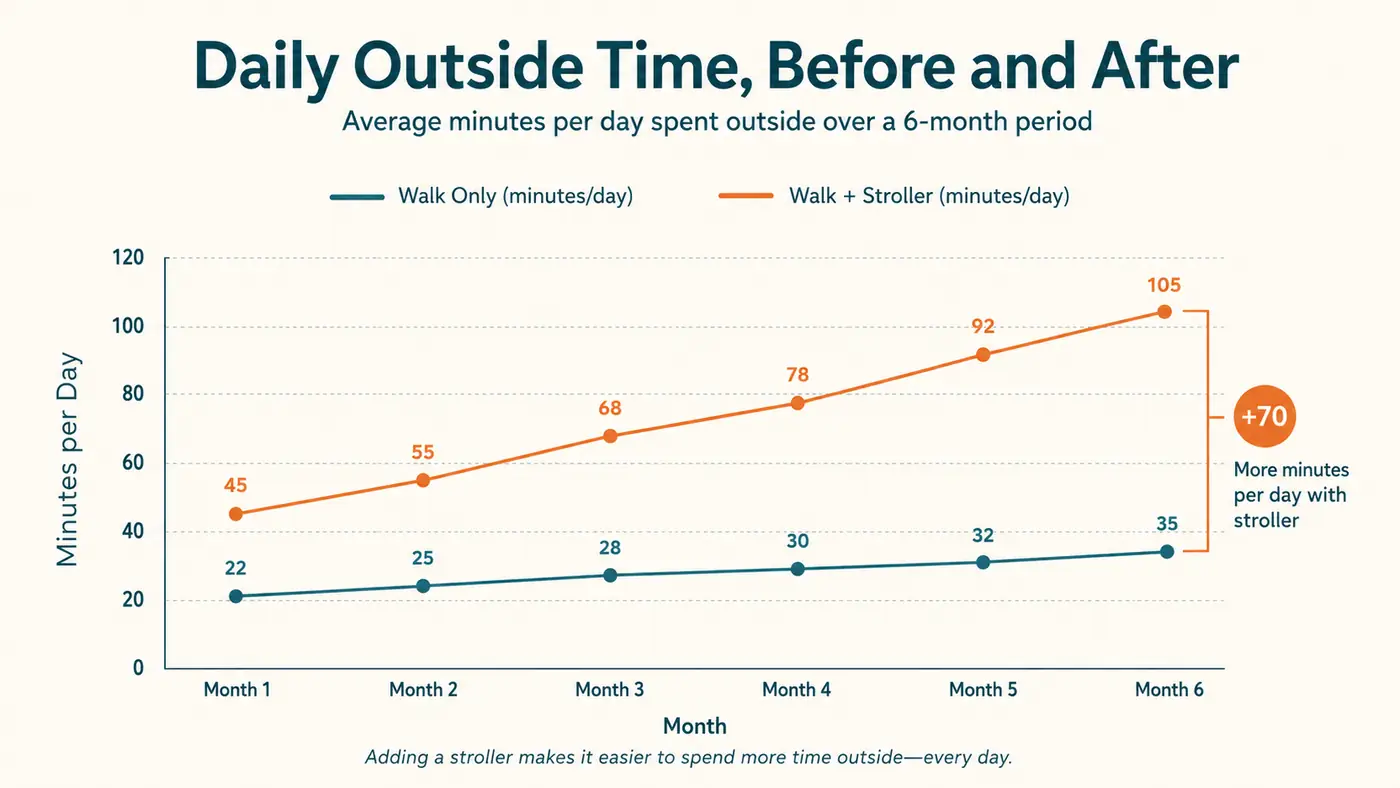
Before the stroller, Duke's daily activity had quietly shrunk to about ten or fifteen minutes of outside time, most of it just enough to do his business and turn around. His vet had flagged the drop-off at his spring checkup, not as an emergency, but as the kind of thing that snowballs into muscle loss and worse joint stiffness if you let it keep shrinking. That conversation is what actually pushed me to buy the stroller instead of just accepting shorter and shorter walks as the new normal.
Six months later, Duke is back up to thirty to forty-five minutes of outside time most days, split between walking on his own legs and riding. His muscle tone in the back end is noticeably better than it was in the spring, not because the stroller strengthened anything, but because he's covering more ground total and using his legs for the parts he can still handle instead of not going at all. His energy at home changed too. A dog who gets a real outing, even a partial one, settles differently in the evening than a dog who's been cooped up all day.
The other change is harder to measure but just as real to me. Duke gets to be part of the pack walk again. Before the stroller, I was starting to leave him home and just walk Ranger and Gus without him, which felt awful every single time I did it. Now all three of them go together, and Duke still gets his sniffs, still sees the neighbors, still barks at the mail truck from a moving vehicle instead of a window. That's worth more to me than any joint supplement I've tried.
What It Costs to Keep Running
The upfront price is low enough compared to premium wagon-style strollers that I never agonized over the purchase, and six months in, the ongoing cost has been close to zero. I hose down the mesh and floor pad about once a month, more often in muddy season, and it dries in an afternoon on the back porch. No batteries, no parts that need replacing, nothing that's asked for maintenance beyond a basic wipe-down.
The one thing I did have to buy separately was a cheap rain cover, since the stroller doesn't come with real weather protection and Ohio doesn't care about your walking schedule. That was a small add-on, not a dealbreaker, and it's the only extra I've needed to keep using it year-round.
Storage has been simple too. It folds down small enough to live standing up in a garage corner rather than taking over a closet, and it fits in my trunk alongside groceries without me having to rearrange anything. For a household like mine that's already juggling leashes, crates, and foster supplies, not needing to think hard about where the stroller lives day to day matters more than it sounds like it should.
Alternatives I Looked At First
Before I settled on this one, I looked at two other routes. The first was a four-wheel wagon-style pet stroller, which I ruled out because it was nearly double the price and honestly more stroller than a mixed-breed household like mine needed. The second was just continuing with shorter walks and adding a joint supplement, which our vet also recommended and which I still use, but which didn't solve the actual problem of Duke needing to move his body regularly to maintain what mobility he has left.
I also briefly considered a jogging-style three-wheeler built for runners who bring their dog along, but that felt like the wrong tool for a dog who isn't running anymore, just walking slower. The BestPet stroller sits in the middle of those options: cheaper and lighter than the premium wagon builds, more purpose-built for an actual senior dog than a jogging stroller, and priced low enough that I didn't spend weeks going back and forth on the decision the way I sometimes do with bigger-ticket pet gear.
What I Liked
- Light enough to lift in and out of a trunk one-handed, even for me at five foot four
- Turns tight on narrow sidewalks, useful when walking multiple dogs at once
- Mesh compartment has held up to near-daily use over six months with no rips
- Genuinely gave Duke back thirty-plus minutes of outside time a day
- Basically no ongoing cost, just an occasional hose-down
- Price point made it an easy yes compared to premium wagon-style strollers
Where It Falls Short
- Aluminum frame isn't built for rough trails or off-road terrain, sidewalks and paved paths only
- Suspension is basic, more shock absorption than true suspension
- Weight capacity means it's not the right fit for a dog Duke's size if you also want room for a second small dog
- Took Duke about two weeks to stop whining at passing dogs while riding
- No included rain cover, so budget a small add-on if you walk year-round in wet weather
The stroller didn't fix Duke's hip. It just meant his hip stopped deciding how much of the world he got to see every day.
Who This Is For
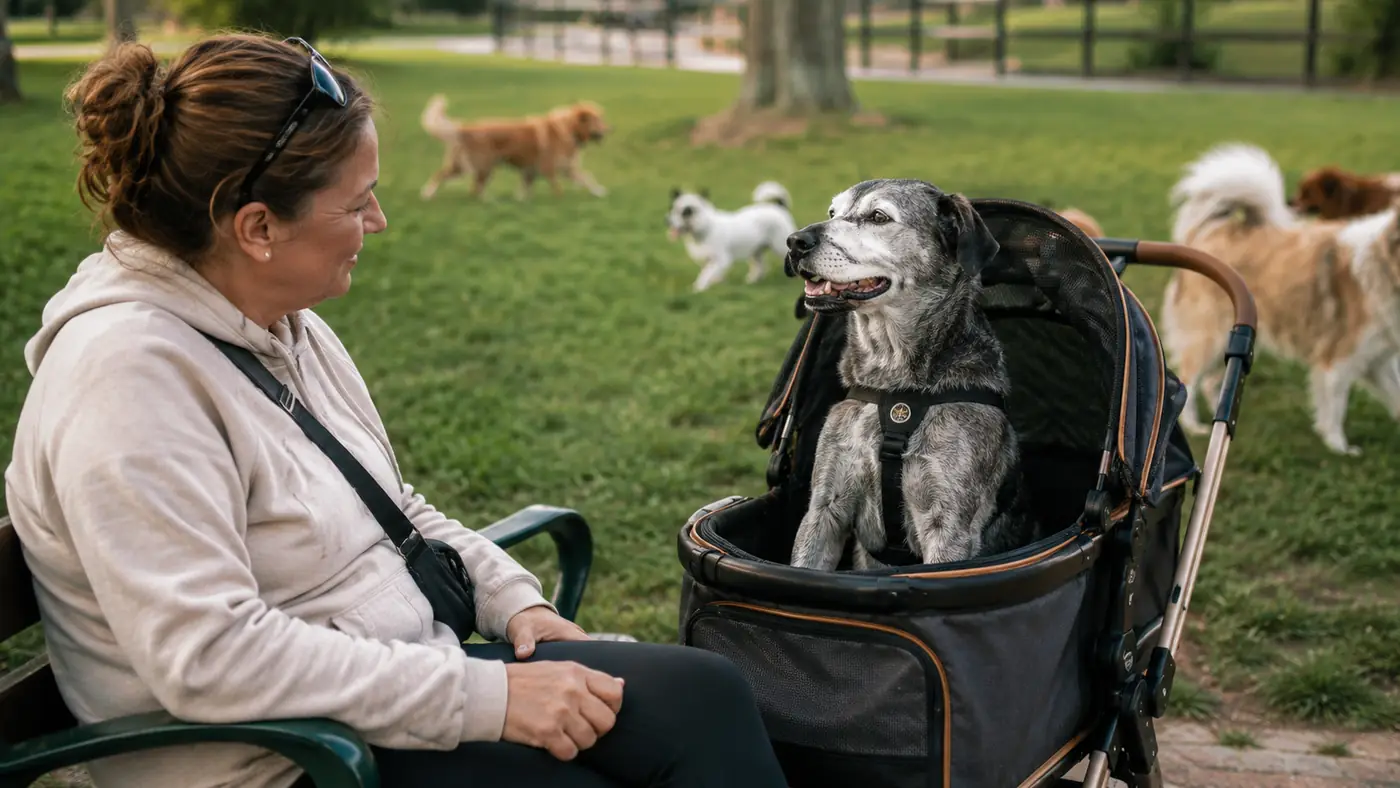
This is the right buy for a household with a senior or recovering dog who still wants to go on walks but physically can't cover the same distance anymore, especially if you're also managing other dogs on the same outing the way I am with Ranger and Gus. It's also a good fit for anyone recovering from a specific injury or surgery where the vet wants activity limited but not eliminated. If your dog is under about fifty pounds and mostly needs shade and slower pace rather than a place to actually sit down, it works well for that too. Fosters who come through with unknown mobility histories, like Otis and Pearl both did in their first few weeks here, are exactly the kind of dogs this stroller ends up being useful for before I even know their full story yet.
Who Should Skip It
If you're an active runner looking to bring your healthy dog along on real jogs or trail runs, this isn't built for that job, look at a dedicated jogging stroller with bigger air-filled tires and real suspension instead. If your dog is reactive or anxious around the kind of close, enclosed feeling a mesh compartment creates, budget extra weeks for training before you count on it working, or consider whether it's the right tool at all. And if you're hoping a stroller will replace walks entirely rather than extend them, it won't do that, Duke still needs and wants to use his legs for as long as he's able. A dog who's still fully mobile and simply lazy on hot afternoons probably doesn't need this yet either, save it for when the legs actually start asking for help.
Six months later, Duke still gets his walk. Every single day.
That's really the whole review. If your dog's legs are asking for a break your walks can't afford to take, this is the stroller that's kept ours going daily for half a year straight.
Amazon Check Today's Price on Amazon →