
I want to tell you something Amazon reviews never quite capture, which is that a product can be genuinely worth the money and still have three or four things about it that would have changed how I used it, if someone had just told me up front. The BestPet 3-Wheel Pet Stroller is that kind of product. My other review on this site covers six months of daily walks with Duke, my twelve-year-old Lab mix with the bad hip. This one is different. This is the stuff I noticed in the first two weeks, the stuff that showed up only at certain speeds or certain angles, the small honest details that don't fit into a tidy verdict but absolutely affect whether you'll be happy with this stroller the day it shows up on your porch.
I run a foster household in Ohio, two dogs of my own, Ranger and Gus, a senior cat named Biscuit, and a rotating cast of rescues that's included Daisy, Tank, and Pixie over the years. I've unboxed a lot of pet gear in this house. Most of it disappoints me in small, specific ways that nobody warns you about ahead of time, and I've made it a habit to write those details down the day they happen instead of smoothing them over once I've gotten used to the product. This is that list for the BestPet stroller, written honestly, cons included.
The Quick Verdict
A solid, honest budget stroller with a real wobble at speed, a zipper pull that needs a light touch, and a weight limit that behaves differently than the number on the box suggests. Still earns its keep for the right dog.
Amazon Check Today's Price →The wobble is real. So is the fact it still works.
Nobody tells you about the front wheel or the zipper pull before you buy. I'm telling you now, and I'm still glad I own it. Check today's price and see the current listing for yourself.
Amazon Check Today's Price on Amazon →What Nobody Tells You Before You Unbox It
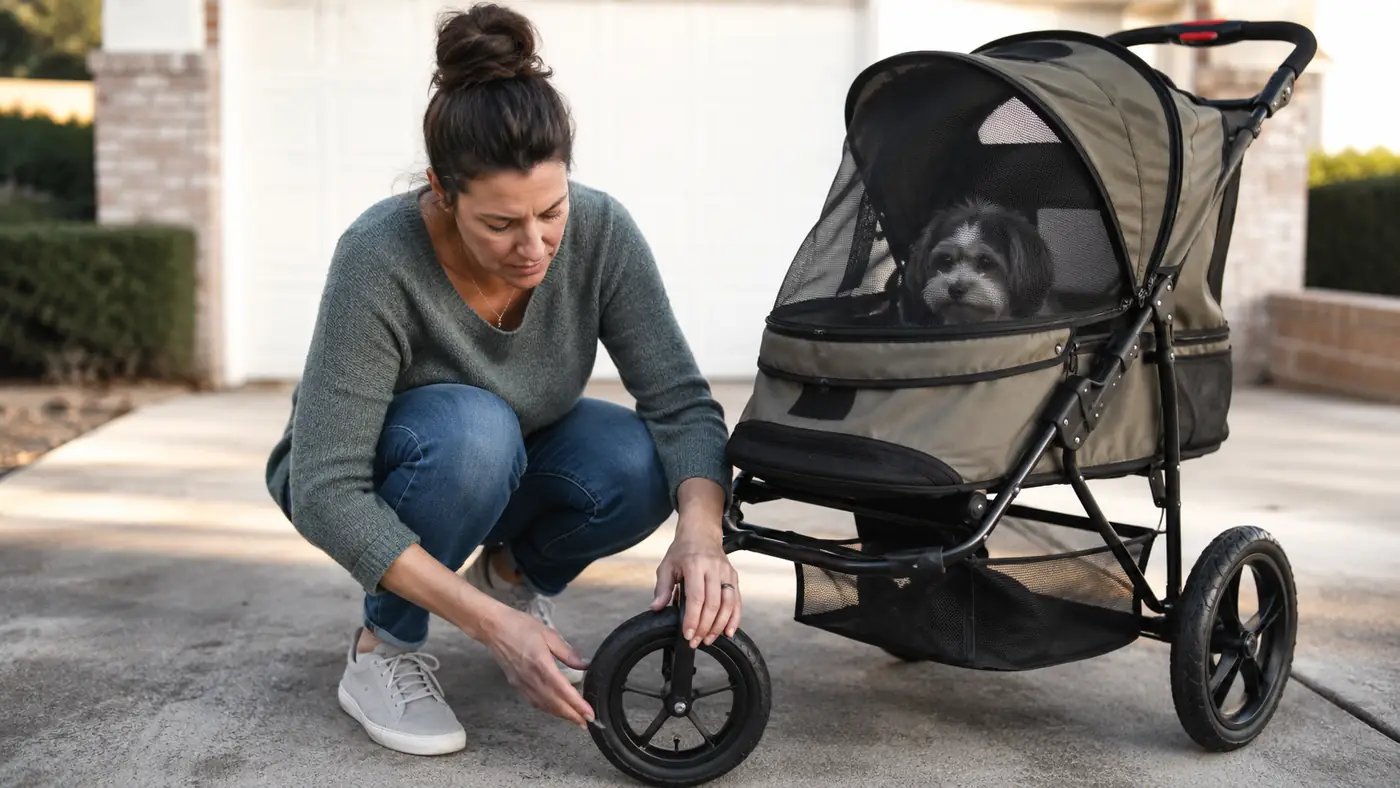
The box is smaller than you'd expect for something described as a stroller, which threw me for a second when it arrived. Everything is folded flat and wedged in tight, and the assembly, while genuinely simple compared to a lot of pet furniture I've put together, is not the thirty-second job the listing photos imply. You're popping the frame open, locking the rear axle into place, and snapping the front wheel fork onto its mount. That last step is the one that gave me trouble. The fork has to seat at a specific angle before the locking pin will drop, and my first attempt left it looking assembled while actually sitting slightly cocked to one side. I didn't catch it until Duke was already loaded in and the stroller pulled noticeably left on our first lap around the driveway.
Once I popped the fork back out and reseated it properly, the pull-left problem disappeared completely, so I'm not dinging the stroller for a design flaw here. What I am flagging is that the instructions don't tell you what a correctly seated fork should look or feel like, just that you snap it on. If you're assembling this for the first time, take an extra thirty seconds to check that the front wheel sits perfectly straight and centered before you ever push it forward with your dog inside. It's a five-minute fix if you catch it early and a confusing, slightly alarming ride if you don't.
The other thing worth knowing going in is that there's a break-in period for the fabric. The mesh and the seat liner arrive stiff from being compressed in the box, and they don't sit quite right the first day or two. Give it a couple of short test walks around the yard before you trust it on a real outing, mostly so you and your dog both get used to how it moves and folds before you're three blocks from the car.
The Front Wheel Wobble Nobody Mentions
Here's the honest part most reviews skip entirely. At a normal, unhurried walking pace, on flat sidewalk, the front swivel wheel tracks straight and true. The moment you pick up the pace, whether that's because you're late, because a squirrel just crossed the yard, or because you're trying to keep up with Ranger pulling ahead on his leash, that front wheel starts to shimmy. It's not dramatic, and it's never once nearly tipped over on me, but there's a distinct side-to-side flutter that kicks in somewhere between a brisk walk and a light jog, the kind of speed you'd naturally hit crossing a busy intersection or cutting a walk short because it started raining.
I tracked down why this happens after it bothered me enough to actually look closely. The front caster uses a simple friction swivel with no lock engaged during normal pushing, so above a certain speed it starts hunting for center instead of holding it, the same way a loose shopping cart wheel does. Locking the swivel solves the wobble completely, but then you lose the tight turning radius that makes this stroller so easy to maneuver around mailboxes and other dogs in the first place. It's a genuine tradeoff, not a defect, and once I understood what was happening I just adjusted my own pace instead of expecting the stroller to handle speed it wasn't built for.
If your walks are unhurried, this will never bother you. If you tend to walk fast, or you're pushing this stroller while jogging even a little, you'll notice it within the first outing and you should plan to lock the front swivel for anything faster than a relaxed stroll.
The Zipper Is Fine. The Zipper Pull Is Not.
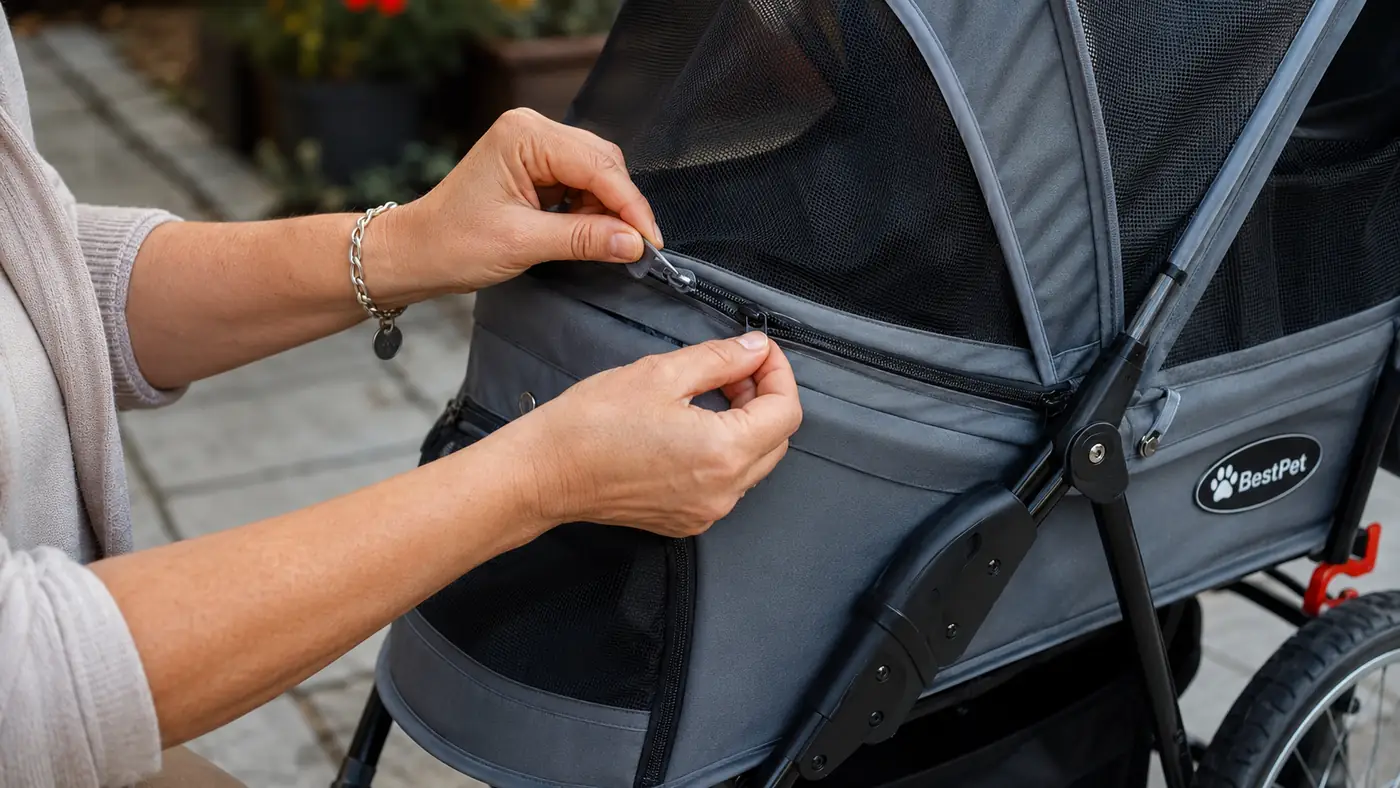
The mesh dome itself is decent quality, tightly woven, no loose threads out of the box, and it's held its shape without sagging or tearing. That part earns a genuine compliment. The zipper track that runs around the top opening is also fine, sturdy plastic teeth that haven't skipped or jammed on me. The problem is the pull tab attached to it, a small molded plastic loop that's noticeably thinner and cheaper feeling than everything else on the stroller. Within the first few weeks mine started catching slightly at one specific spot along the curve, right where the track bends around the corner of the dome frame.
It's not broken, and it hasn't gotten worse since that first snag, but it does mean I've learned to slow down and guide it through that corner with my other hand instead of yanking it in one motion the way I would with a jacket zipper. If you're loading a squirming dog who wants out immediately, or you're managing a leash in one hand and trying to zip with the other, that little hesitation catches you off guard the first few times it happens. I'd genuinely trade a slightly heavier zipper pull for one that glided through that corner without any resistance at all.
My honest advice here is small but useful. Unzip and rezip the dome fully a handful of times before your first real outing, purely so your hands learn where that corner is and how much give the pull actually needs. It sounds fussy, but it turned a mildly annoying surprise into a non-issue once I knew what to expect.
The Weight Limit on the Box vs the Weight Limit in Real Life
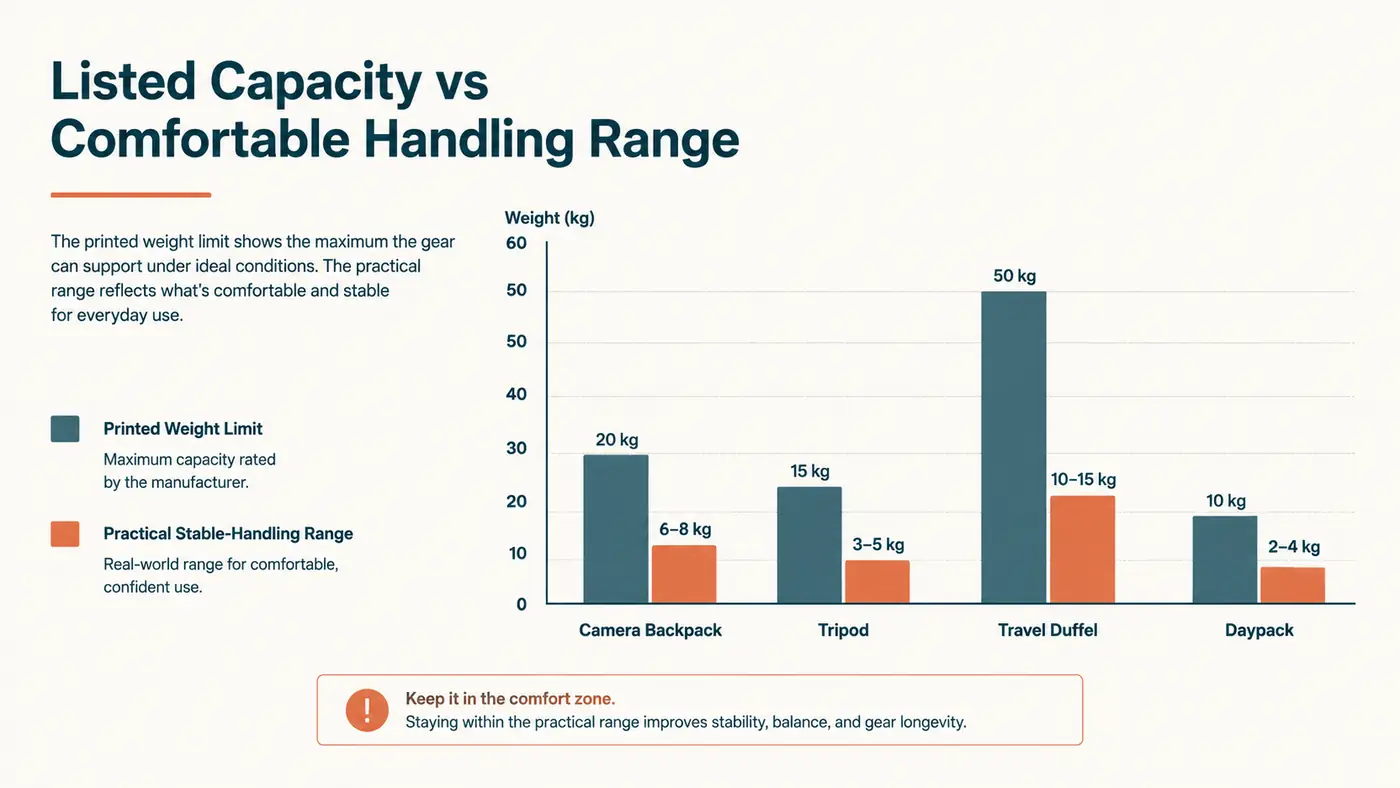
The listed capacity gives you a number that sounds generous, and technically it is, Duke at seventy-six pounds sits comfortably under it with room to spare on paper. What the printed number doesn't tell you is that the frame's comfortable, stable handling range is meaningfully narrower than its maximum rating. There's a real difference between a stroller that can hold a certain weight without breaking and a stroller that handles smoothly at that weight, and this is a case where those two things aren't the same conversation.
With Duke loaded in, pushing at a calm, steady pace on flat pavement, the stroller feels completely under control. Push it up even a gentle incline, or try to correct course quickly around another dog, and I can feel the frame working harder than it does with a lighter foster dog riding the same route. It's not unsafe, and it's never buckled or strained audibly, but there's a noticeable difference in how much muscle it takes to steer and how much that front wheel wobble from earlier gets amplified once you're near the upper end of what the stroller comfortably handles.
My honest read after using this with dogs ranging from Pixie's four pounds up to Duke's seventy-six is that the sweet spot for effortless handling sits well below the printed maximum, more in the range of a mid-size dog than a large one. If your dog is on the bigger end of what this stroller claims to hold, budget for a slower pace and flatter routes, and don't expect the same nimble, one-handed feel you'd get with a smaller passenger. It still works. It just works differently than the number on the box suggests it should.
Folding It Down: The Two-Second Fix Took Me Two Weeks to Learn
The folding mechanism is genuinely clever when you know the trick, and genuinely frustrating when you don't. There's a specific order of operations, release the side latch first, then collapse the frame downward, then fold the front wheel fork inward last, and if you do those steps out of sequence the whole thing jams halfway closed and refuses to budge. For my first two weeks of ownership I was doing it in the wrong order without realizing it, fighting the frame every single time, occasionally pinching the same spot on my palm between two struts closing at once.
Once a fellow foster volunteer showed me the correct sequence, folding it went from a minor daily annoyance to an actual one-handed, two-second motion. That gap between frustrating and effortless is entirely about knowing the order, not about the stroller being poorly designed, but it's exactly the kind of thing that makes someone leave a rougher review than the product deserves after a rough first week. If you buy this stroller, learn the release-collapse-fold sequence before you need to do it quickly in a parking lot with your dog already whining to get out, because that's the worst possible moment to be fighting a jammed frame for the first time.
The pinch point specifically is at the main hinge where the side struts cross when the frame collapses. It's not sharp and it's never drawn blood, but it's enough to make you yelp once, and after that first pinch you develop an instinct to keep your fingers clear that honestly should have been obvious from the design in the first place.
What the Amazon Photos Don't Show You
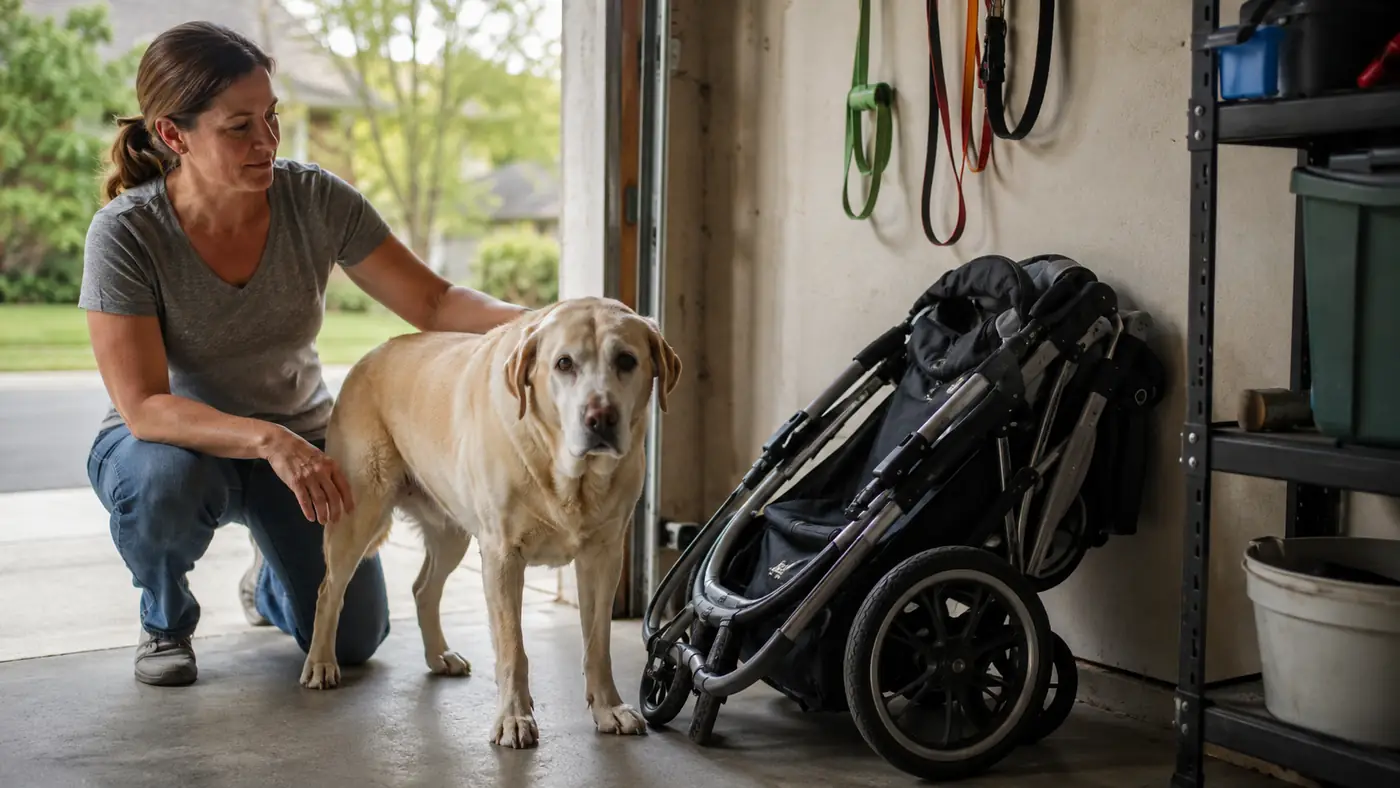
The listing photos make the interior compartment look roomier than it feels once your dog is actually inside. Part of that is camera angle, part of it is that the photos are shot with the mesh dome propped fully open and no dog sitting upright inside pushing against the ceiling. Duke can sit up in it, but he can't stand and turn around comfortably, and a dog his size lying stretched out uses nearly the entire floor. For a smaller dog like Pixie this is a non-issue, she's got room to spare, but if you're picturing your large dog lounging around freely the way the marketing shots suggest, adjust that expectation before you buy.
The wheels also look bigger in the photos than they are in person. It's a subtle thing, the product shots are angled low and close to make the whole stroller look more substantial and trail-capable than it actually is. In hand, the wheels are smaller and clearly built for sidewalks and pavement, not the gravel or grass the occasional lifestyle photo implies. Once you've seen it in person you understand immediately why the wobble at speed happens, small wheels with a light frame simply weren't built for anything faster than a walk on smooth ground, no matter how the marketing photos frame it.
The last thing the photos gloss over is color. Mine arrived a slightly duller, more muted shade than the listing images suggested, not a dealbreaker by any stretch, but if you're matching it to anything or you have strong feelings about color accuracy, know that product photography lighting is doing some of the work in those listing shots.
What I Liked
- Genuinely holds up over daily use once the fork is assembled correctly and seated straight
- Mesh fabric quality is solid, no tearing or sagging after months of loading and unloading
- Folds down to nearly nothing once you learn the correct release-collapse-fold sequence
- Tight turning radius makes it easy to maneuver around other dogs and tight sidewalks
- Comfortable and stable for small to mid-size dogs well within the practical handling range
Where It Falls Short
- Front wheel develops a noticeable wobble anywhere above a relaxed walking pace
- Zipper pull catches at one corner of the dome track and needs a guiding hand, not a yank
- Real-world stable handling range is narrower than the printed weight capacity suggests
- Folding mechanism has a pinch point at the main hinge if you don't know to keep fingers clear
- Interior feels tighter for larger dogs than the listing photos make it look
Nothing here is a dealbreaker on its own. Together, they're the difference between a stroller that surprises you and one that just works, and the only difference is whether someone told you first.
Who This Is For
This stroller earns its keep for anyone whose walks are unhurried, whose dog falls in the small to mid-size range, and who's willing to spend one afternoon learning the fold sequence and checking that the front fork sits straight before the first real outing. It's a great fit for fosters with unknown mobility histories, the way Daisy and Tank both came through my door not walking well and needing an easy, low-commitment way to still get outside. If your walking pace is closer to a leisurely stroll than a brisk power walk, none of the quirks above will bother you much, and you'll get a genuinely useful, budget-friendly piece of gear out of it.
It also suits anyone who values portability over ruggedness, someone who needs a stroller that lives folded in a trunk or a closet corner and comes out for occasional vet trips, short recovery walks, or nervous fosters who need to see the world from somewhere that feels safer than the ground. Once you know its handling range, it's an honest, capable tool for exactly that job.
Who Should Skip It
Skip this one if you walk fast by nature or you're hoping to jog with your dog riding along, the front wheel wobble will bother you from the first outing and no amount of getting used to it fixes that specific limitation. Skip it too if your dog sits at the upper end of the weight range and you're expecting the same effortless, one-handed steering you'd get with a smaller passenger, because that gap between the printed capacity and the comfortable handling range is real and it's the single biggest source of disappointment I'd expect from buyers who size up without reading this part first. And if fine motor patience isn't your thing, the zipper pull's one quirky corner and the fold sequence's learning curve will read as flaws rather than the minor, fixable details they actually are once you know them.
Now you know what the listing photos leave out.
Wobble at speed, a zipper that needs a gentle hand, a real-world weight range narrower than the box implies. Knowing all of that, it's still the stroller I keep using. See today's price and decide for yourself.
Amazon Check Today's Price on Amazon →